Why Pediatric Skincare Needs a Science-First Approach
Jan 1, 2026
Why Pediatric Skincare Needs a Science-First Approach
Here's something that might surprise you: your baby's skin is up to 30% thinner than yours. Think about that for a moment. It's like comparing tissue paper to regular notebook paper.
This isn't just a fun fact to share at your next parent meetup—it's the fundamental reason why what goes on your baby's skin matters so much more than you might think.
When my colleague became a first-time parent last year, she stood in the skincare aisle for nearly forty-five minutes, overwhelmed by products promising everything from "ultra-gentle" to "clinically proven."
She told me later that she felt confused, unsure whether to trust the cheerful packaging or the ingredient list she couldn't quite decipher. If this sounds familiar, you're not alone.
The Problem with Pretty Packaging
Walk into any store, and you'll find shelves lined with baby products adorned with soft clouds, smiling babies, and words like "natural" and "pure." But here's what keeps dermatologists up at night: in many countries, these terms aren't regulated when it comes to skincare.
A product can call itself "gentle" without meeting any specific scientific standards. According to research published in the Pediatric Dermatology journal, approximately 60% of children under two years old use at least one product daily that could potentially irritate their sensitive skin (source).
This is where science-first skincare becomes not just important, but essential.
What Does "Science-First" Actually Mean?
Let me break this down in a way that makes sense for your busy parent brain. Science-first skincare means that every ingredient, every formulation, and every claim has been tested, researched, and proven through clinical studies. It's the difference between someone saying "this should be safe for babies" and someone showing you the data that proves it is safe.
Think of it like this: you wouldn't give your child medication without knowing it's been properly tested, right? The same logic applies to skincare.
Your baby's skin absorbs products more readily than adult skin—up to three times more efficiently, according to dermatological studies.
When products are developed with a science-first approach, it means researchers have considered factors like:
pH balance: Baby skin has a naturally higher pH (around 5.5-6) compared to adult skin, making it more vulnerable to irritation
Ingredient penetration: How deep ingredients travel into those delicate skin layers
Allergen potential: Which compounds are most likely to trigger reactions in developing skin
Long-term effects: Not just immediate comfort, but skin health months and years down the line
The Real Cost of Getting It Wrong
Last month, we spoke with a pediatric dermatologist with fifteen years of experience, who shared something that stuck with me. She said, "I see babies every week whose parents did everything with love and good intentions, but they were misled by marketing instead of science. The result? Eczema flares, contact dermatitis, and uncomfortable little ones who can't tell us what's wrong."
The numbers tell a sobering story. Research from the American Academy of Dermatology indicates that childhood eczema rates have increased by more than 300% over the past thirty years in industrialized countries (source).
While genetics play a role, environmental factors—including skincare products—contribute significantly to this trend.
Here's what can happen when products aren't scientifically formulated for pediatric skin:
Compromised skin barrier: Without proper formulation, products can strip away the natural oils that protect baby skin, leading to dryness, cracking, and increased vulnerability to infections.
Sensitization: Early exposure to certain fragrances and preservatives can trigger allergies that last a lifetime. Studies show that babies exposed to allergens through skincare products are 2.5 times more likely to develop sensitivities later in childhood.
Disrupted microbiome: Your baby's skin hosts beneficial bacteria that form their first line of defense. Harsh or improperly balanced products can wipe out this protective layer.
The Science Behind Baby Skin: Why It's So Different
Let's get a bit technical for a moment, because understanding this will change how you think about every product you choose. Baby skin isn't just smaller adult skin—it's fundamentally different in structure and function.
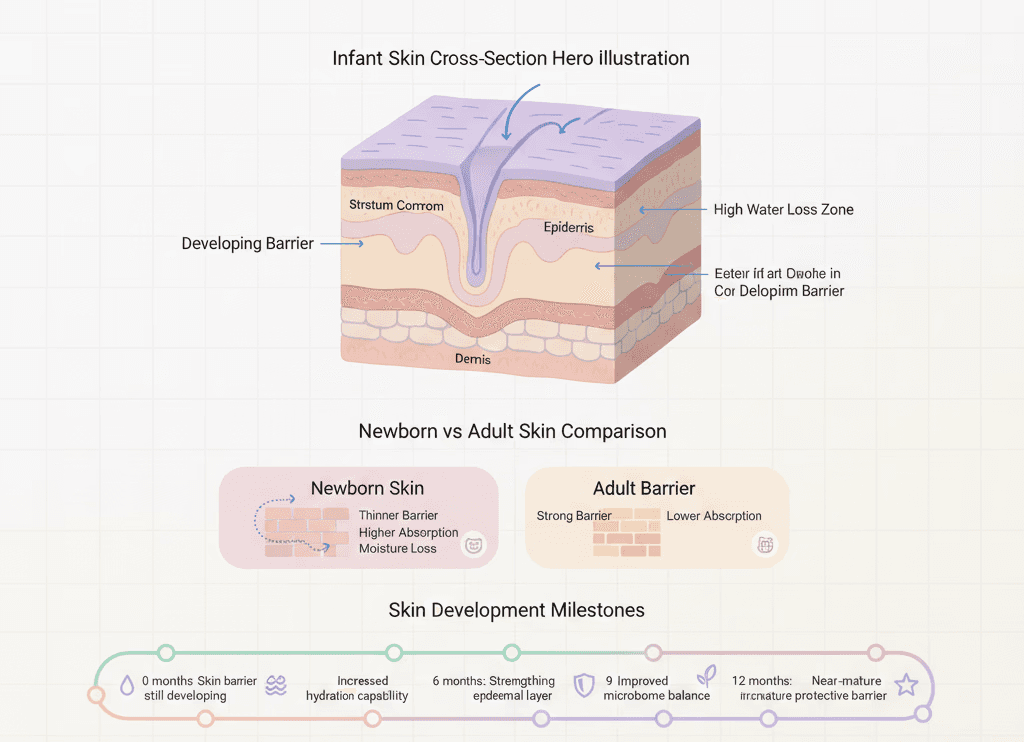
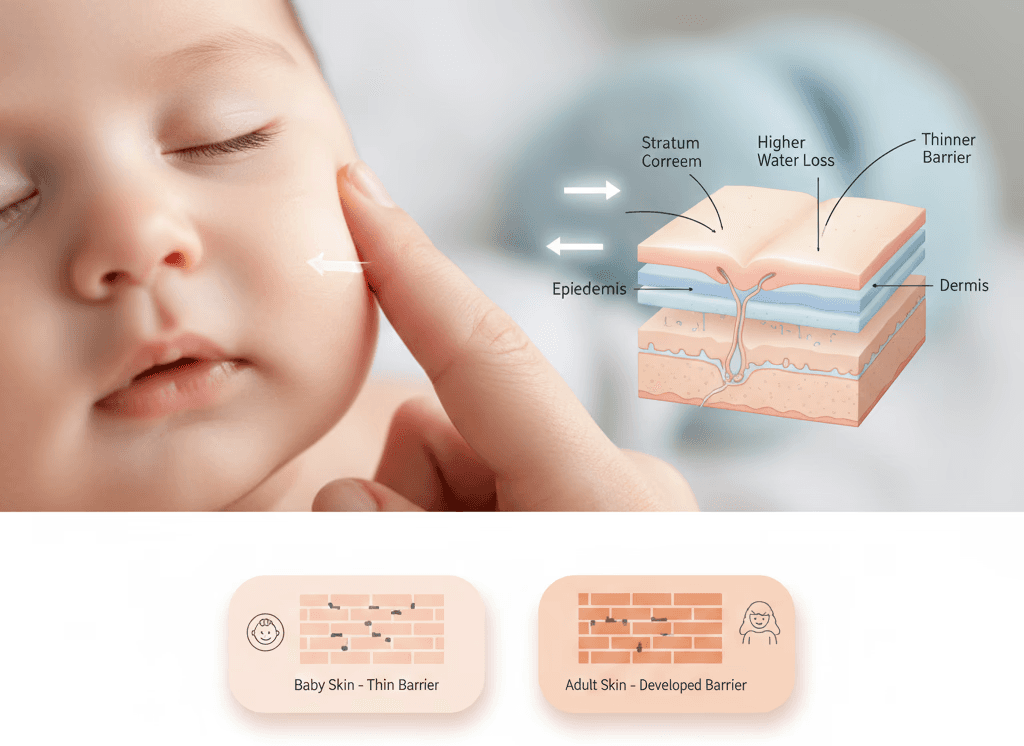
In the first twelve months of life, your baby's skin is developing its protective capabilities. The stratum corneum (the outermost layer of skin) is still maturing, which means it doesn't hold moisture as effectively and allows more substances to pass through. According to research published in the Journal of Investigative Dermatology, infant skin loses water at nearly twice the rate of adult skin (source).
Imagine your baby's skin as a brick wall that's still being built. Adult skin has tightly mortared bricks creating a strong barrier. Baby skin has bricks that aren't quite fitted together yet, with gaps that let things in and out more easily.
This is exactly why harsh soaps, fragrances, and unproven ingredients can cause problems that might not affect your own skin at all.
What to Look For: The Science-First Checklist
When you're standing in that overwhelming skincare aisle (or scrolling through endless online options at 2 AM during a feeding), here's what science-first actually looks like in practice:
Dermatologist-tested formulations: This means actual doctors who specialize in skin have reviewed and approved the product. Not just any doctor—skin doctors specifically.
Clinical trials on infant skin: Look for brands that conduct age-appropriate testing. A product tested only on adults doesn't tell you anything about its effects on baby skin.
Minimal ingredient lists: More isn't better when it comes to baby skincare. The best formulations include only what's necessary and proven effective. Research shows that products with fewer than ten ingredients have significantly lower rates of adverse reactions in children under three.
pH-balanced formulations: Remember that pH we talked about? Products should be formulated to match your baby's natural skin pH, not yours.
Free from common irritants: This includes artificial fragrances, dyes, parabens, and harsh sulfates. But here's the key—it's not just about what's NOT in the product, but what IS in there and why.
The Fragrance Question Everyone Asks
Let's address the elephant in the room: fragrance. We all love that "baby smell," but here's what science tells us. Fragrances are among the top five allergens in skincare products, and baby skin is particularly vulnerable. The European Commission on Health and Consumer Protection found that fragrance ingredients are responsible for 15-34% of contact dermatitis cases in children (source).
This doesn't mean baby products should smell clinical or unpleasant. Science-first brands often achieve that gentle, clean scent through careful formulation of the base ingredients themselves, not through added fragrances. Think of it like cooking—quality ingredients create their own pleasant aroma without needing artificial flavouring.
Moving Beyond Marketing Myths
The skincare industry has done something clever and, frankly, a bit problematic. They've convinced many parents that "natural" automatically means safe and "chemical" means dangerous. But here's what science actually tells us: everything is a chemical, including water. And some of nature's most potent allergens and irritants come from plants.
Essential oils, for instance, are marketed as natural and gentle, but dermatological research shows they're among the most common causes of allergic reactions in babies. Meanwhile, synthetic ingredients developed specifically for sensitive skin—like ceramides that match those naturally found in healthy skin—can be incredibly beneficial and safe.
A science-first approach doesn't villainize natural ingredients or praise synthetic ones automatically. It evaluates each ingredient based on evidence, safety data, and clinical outcomes.
The Questions You Should Be Asking
Next time you're choosing a product for your baby, here's what to ask:
Has this product been tested on actual babies? Not just deemed safe through adult testing or theoretical safety assessments, but real clinical trials with infants.
Who formulated this product? Were dermatologists or pediatricians involved in its development?
What specific skin concern does this address, and what's the evidence it works? Vague claims like "nourishes skin" don't tell you much. Look for specific, measurable benefits backed by studies.
Is the company transparent about their testing and ingredients? Science-first brands are usually happy to explain their formulation process and share their research.
The Bottom Line
Your instinct to protect your baby is powerful, and that's exactly why choosing science-first skincare matters so much. Every time you apply lotion, wash their hair, or clean their delicate skin, you're making decisions that affect their comfort, health, and long-term skin development.
The good news? You don't need a degree in dermatology to make smart choices. You just need to look past the marketing to the science beneath it. Choose brands that prioritize research over pretty packaging, that test their products rigorously, and that can back up every claim with evidence.
Because at the end of the day, your baby's skin is doing something remarkable—it's building the protective barrier they'll rely on for life. The least we can do is support that process with products that are proven to help, not hinder.
When you choose science-first skincare, you're not just buying a product. You're investing in your baby's long-term skin health with the confidence that comes from knowing every ingredient, every formulation, and every claim has been carefully researched with your little one's unique needs in mind.
And that's not just smart parenting—it's the only approach that makes sense when you understand just how special and vulnerable that baby skin really is.

Similar Blogs
News, Voices & Impact
Explore updates, field notes, and stories that showcase our mission and impact.