Meet Neuva Life Sciences: Science of Skincare
Jan 4, 2026
Neuva Life Sciences: Science of Skincare for Your Baby
Here's the thing about baby skincare products: there are way too many of them. Walk down any baby aisle and you'll find hundreds of bottles, each promising something slightly different, and you're left standing there wondering which ones you actually need.
What if I told you that most babies need exactly four products? Not fourteen. Not forty. Four.
That's the philosophy behind Neuva Life Sciences, and honestly, it's refreshing. In a market that thrives on making parents feel like they need everything, Neuva takes the opposite approach: figure out what baby skin actually needs, create products that deliver exactly that, and skip all the unnecessary stuff.
Let me walk you through their range, because once you understand what each product does and why it matters, baby skincare suddenly becomes a lot less overwhelming.
Starting Simple: Cerabar
Think about how often you actually need to wash your baby with soap. If you really think about it, it's probably less than you're doing right now. For tiny babies who aren't crawling through dirt or eating spaghetti yet, plain water handles most cleaning needs just fine.
But when you do need a cleanser—for the diaper area, for that sweet potato that somehow ended up behind their ear, for actual dirt—you want something that cleans without causing problems.
That's where Cerabar comes in. It's Neuva's bathing bar, and the first thing to know is that it's not actually soap. Traditional soap has a really high pH—around 9 or 10—which sounds technical but basically means it's quite harsh. Your baby's skin has a pH around 5.5 to 6, which is slightly acidic. That gap matters because every time you use high-pH soap, your baby's skin has to work to restore its natural balance.
Cerabar is soap-free and pH-balanced to match baby skin. So you're cleaning without fighting against your baby's natural skin chemistry.
The other clever thing about Cerabar is the ceramides. These are lipids (fats) that exist naturally in healthy skin, forming part of that protective barrier we're always talking about. When you wash with Cerabar, you're not just avoiding stripping away the good stuff—you're actually adding some back in. It's like cleaning that simultaneously protects.
There are also natural oat lipids in there, which have this lovely way of soothing skin while forming a light protective layer. Oats have been used for sensitive skin forever, and there's actual science behind why they work so well.
What makes it practical: You can use it on your baby's whole body, including hair (though many babies don't need hair washing more than once or twice a week). It doesn't create huge amounts of foam—less foam actually means gentler cleansing agents. And because it's formulated without all the stuff that commonly irritates baby skin (parabens, phthalates, mineral oil, alcohol), it's genuinely gentle.
How to actually use it: For young babies, 2-3 times a week for a full bath is plenty. Babies don't get that dirty, and over-washing can actually dry out their skin. When you do use Cerabar, a little goes a long way. Lather it gently, pay attention to the folds and creases where moisture likes to hide, rinse well, and you're done.
The Daily Essential: Cerlo
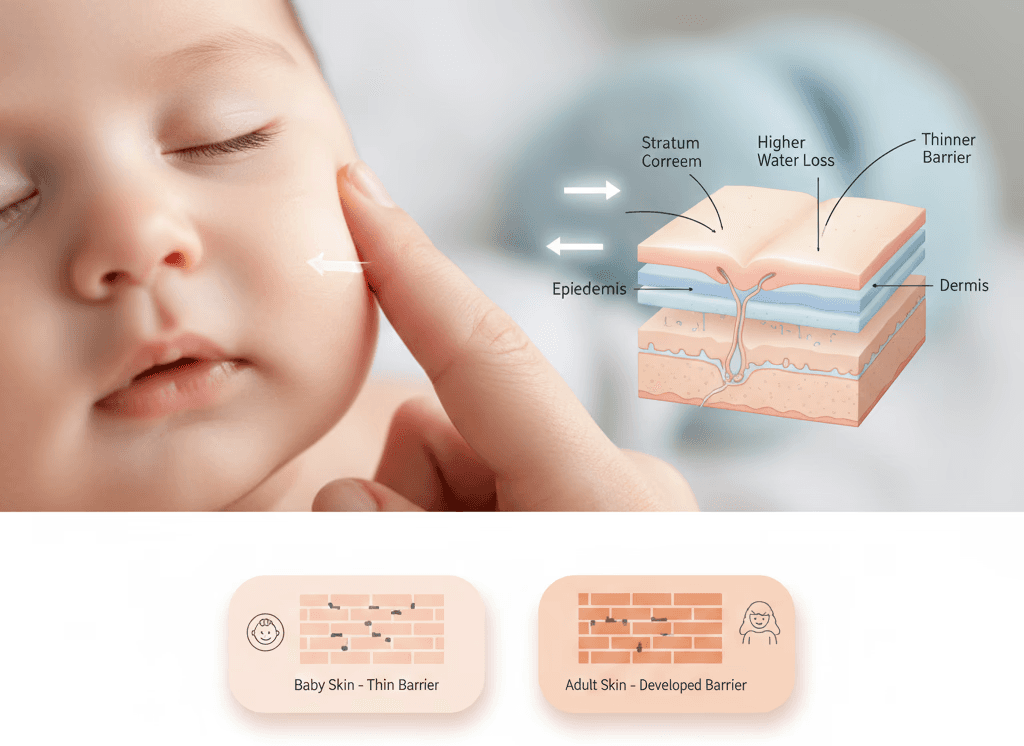
If you're only going to invest in one really good baby product, make it a solid moisturizer. Here's why: baby skin loses moisture faster than adult skin—quite a bit faster, actually. Those tiny skin cells are smaller and more loosely connected, so water just evaporates right through.
Cerlo is Neuva's moisturizing cream and lotion (you can choose based on preference—cream is richer, lotion is lighter), and it's designed to do more than just make skin feel soft temporarily.
The same ceramide blend from Cerabar appears here, which makes sense when you think about it. Your baby's skin is trying to build and organize these lipid layers that form the protective barrier. By providing ceramides consistently—during cleaning and during moisturizing—you're supporting that whole process.
The natural oat lipids add that soothing, protective element. And the formulation is designed to actually reduce how fast moisture evaporates from your baby's skin, not just add moisture that'll disappear in an hour.
Here's something interesting: the texture you choose (cream versus lotion) can depend on your climate and your baby's skin type. Live somewhere humid? The lighter lotion might be perfect. Dealing with winter dryness or a baby with naturally dry skin? The cream offers more intensive support. Some parents even use the lotion during the day and the cream at night.
What makes it practical: Both versions absorb fairly quickly—you're not left with a greasy baby. There's no fragrance, so you get to enjoy your baby's actual baby smell (which is, objectively, the best smell). And because it's formulated to support the skin barrier rather than just sit on top of the skin, you might notice you need to apply it less frequently over time as your baby's skin gets stronger.
How to actually use it: The best time is right after bath, while skin is still slightly damp—pat dry gently, leaving skin a bit moist, then apply Cerlo within a few minutes. This "locks in" the water your baby's skin just absorbed. For babies with very dry skin or eczema-prone areas, you might apply 2-3 times daily. For most babies, once a day does the job—typically after the evening bath as part of the bedtime routine.
The Bonding Ritual: Vcoil
Baby massage is one of those practices that's been around forever in many cultures, and there's good reason for that. Beyond the skin benefits, massage is about connection—that skin-to-skin contact that helps babies feel secure and calm.
But the oil you use matters quite a bit. Some traditional massage oils contain things that can irritate modern babies' sensitive skin. Essential oils smell lovely but can be potent allergens. Mineral oils are inexpensive but don't offer much beyond slipperiness.
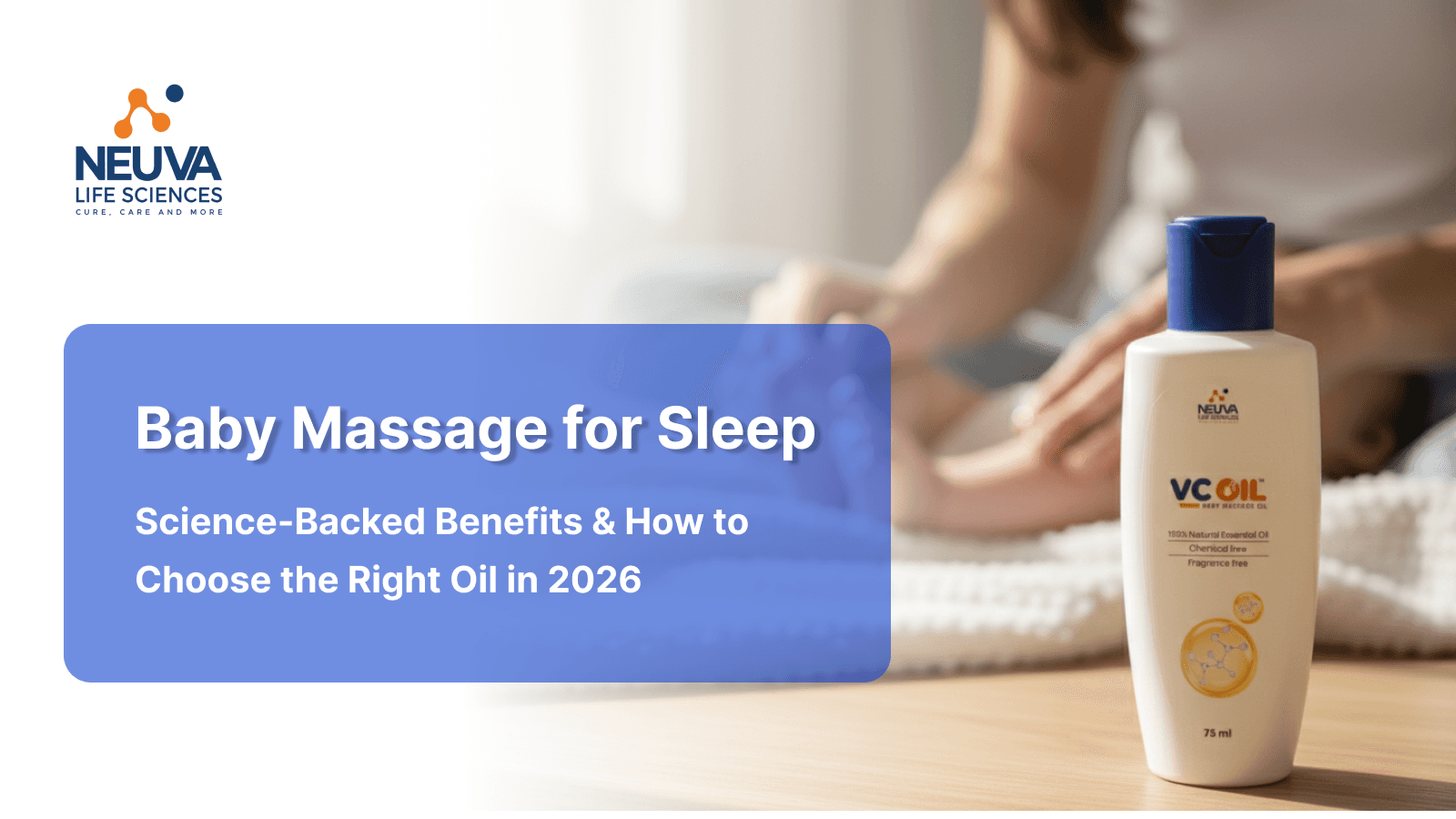
Vcoil is Neuva's baby massage oil, and it's a blend of three really good oils: virgin coconut oil, argan oil, and shea butter.
Coconut oil is interesting because it actually has antimicrobial properties naturally, and it's easily absorbed without leaving heavy residue. Argan oil brings vitamins and antioxidants while being lightweight. Shea butter adds that protective, nourishing element without greasiness.
Together, they create this oil that glides smoothly for massage, absorbs nicely, supports skin barrier function, and doesn't contain any of the stuff that commonly causes reactions (no parabens, no added fragrances, no preservatives).
What makes it practical: A little goes a long way—you don't need to drench your baby in oil for massage to be effective. It doesn't stain most fabrics if a bit gets on clothing or bedding. And unlike some oils that oxidize and go rancid quickly, this formulation stays stable.
How to actually use it: Warm a small amount between your palms until it's body temperature—never apply cold oil directly. Start with gentle strokes on arms and legs, moving toward the heart. For the belly, slow clockwise circles can help with gas and digestion (a real bonus for colicky babies). For the back, long strokes from shoulders down are naturally calming.
The best timing is usually after bath when skin is clean and warm, or as part of a before-bed calming routine. Even just 5-10 minutes can make a difference. Watch your baby's cues—if they're enjoying it, they'll relax into it. If they seem fussy, keep it short and gentle.
The Problem Solver: Bapnap
Let's be real about diaper rash: it's going to happen at some point. Nearly half of all babies deal with it, and it's not about being a bad parent or doing something wrong. The diaper area is just a tough environment for skin—covered, moist, exposed to urine and stool, subject to friction. Sometimes, despite your best efforts, the skin gets irritated.
Bapnap is Neuva's diaper cream, and it's designed to both prevent and treat diaper rash.
The main ingredient is zinc oxide, which has been the go-to for diaper rash for generations because it genuinely works. Zinc oxide creates a physical barrier on the skin that repels moisture and irritants while still letting some air through. This means wetness from urine or stool doesn't sit directly on the skin, but the area isn't completely sealed either (which would trap moisture and make things worse).
The formulation is thick enough to really protect but not so thick that it's impossible to spread or remove. And crucially, it doesn't sting when applied to already-irritated skin—some barrier creams can burn on broken skin, making diaper changes miserable for everyone.
What makes it practical: It works in two ways, which is genuinely useful. Use it preventively (thin layer at every change if your baby is prone to rashes, or during times when rashes are more likely like teething or illness), or use it therapeutically when a rash appears (thicker layer until it clears). You don't need two different products.
How to actually use it: For prevention, apply a thin layer at each change, especially before overnight stretches when diapers stay on longer. For active rashes, clean the area gently, dry thoroughly (this is important—don't apply cream to wet skin), then apply a generous layer. Reapply at every change until the rash resolves.
Some parents also use Bapnap in other moisture-prone areas—neck folds where drool accumulates, behind ears, in arm and leg creases. The same protective properties that work in the diaper area work wherever skin gets irritated from moisture and friction.
Why Four Products Make Sense
So here's the complete picture: Cerabar for gentle cleansing that protects while it cleans. Cerlo for daily barrier support and moisturizing. Vcoil for massage and skin nourishment. Bapnap for diaper area protection.
That's it. Four products that cover everything your baby actually needs.
What you don't see in this range: fifteen different specialty creams for fifteen different problems. Products that make dramatic claims about "boosting immunity" or "detoxifying." Fancy packaging that costs more than the product inside. Formulations loaded with botanical extracts that sound natural but serve no real purpose and might cause reactions.
What you do see: straightforward products that do what they're supposed to do, formulated based on how baby skin actually works, without unnecessary ingredients that just increase the chance of problems.
Putting It Together: A Simple Routine
If you're wondering how these products work together in real life, here's a basic framework:
For most babies:
Bath 2-3 times per week with Cerabar (other days, plain water is fine)
Cerlo after bath while skin is slightly damp
Vcoil massage a few times a week, whenever it fits naturally into your routine
Bapnap at diaper changes for prevention, or more generously if a rash appears
For babies with dry skin or eczema:
Same cleansing approach (less is still more)
Cerlo 2-3 times daily, especially on problem areas
Vcoil before bath for extra lipid layer
Bapnap can be used on any irritated skin folds, not just the diaper area
For babies with normal, happy skin:
You might find you need even less—Cerabar when actually needed, Cerlo once daily, Vcoil when you want that massage time, Bapnap as situations require
The point is flexibility. These products work together as a system, but you adjust based on your baby's specific needs, your climate, the season, and what's realistic for your family.
What "Science-Backed" Actually Means Here
You'll notice Neuva talks about being science-based, which could be marketing speak, but in this case actually means something specific.
The ceramides aren't random—they're specific blends that mirror what exists in healthy skin barriers. The pH levels are carefully matched to baby skin's natural pH. The ingredients that are excluded (fragrance, parabens, phthalates, etc.) are left out based on clinical evidence about what causes problems in infant skin.
And crucially, these products have been tested on actual babies—not just deemed safe through theoretical assessment or adult testing, but used on infant skin with monitoring of results. That's a meaningful distinction.
This is also why the products appear on pediatrician recommendation lists and why many clinics keep them in stock. When formulations are genuinely developed around dermatological science rather than marketing trends, they tend to deliver consistent results. And consistent results build trust.
The Honest Reality of Baby Skincare
Here's what I appreciate most about this approach: it's honest about what babies need versus what companies want to sell you.
Your baby doesn't need seventeen products. They don't need separate face wash, body wash, shampoo, conditioner (conditioner for baby hair—really?), three different moisturizers, special oil for this, special cream for that. They need gentle cleansing when necessary, good moisturizing, optional massage oil, and diaper protection. That's the list.
Everything else is either unnecessary or potentially problematic. Every product you add is another chance for irritation, another opportunity for sensitization, another ingredient list to decode.
Neuva's four-product range cuts through all that noise. It's not about doing more—it's about doing the right things well.
Finding What Works for Your Baby
Every baby is different, and what works perfectly for one might need adjustment for another. The beauty of a simple, well-formulated system like this is that it gives you a solid foundation to start from.
Use all four products if your baby needs all four. Use three if one doesn't apply to your situation. Adjust frequency based on what you're seeing—if your baby's skin is healthy and happy with Cerlo every other day instead of daily, great. If they need it twice daily, that works too.
The goal isn't perfection according to some external standard. The goal is skin that's comfortable, protected, and supported in its natural development. If your baby's skin is soft without being dry, not showing irritation or rashes, and seems comfortable, you're doing it right.
The Bottom Line
Neuva Life Sciences makes products that do what they're supposed to do without fanfare or unnecessary complication. They're formulated around actual skin science, tested appropriately, and priced to be accessible rather than positioned as luxury items.
You won't find them making wild claims or riding trending buzzwords. You will find straightforward products that address specific needs with ingredients that have genuine purpose.
In a market overflowing with options designed to make you feel like you're always missing something, that straightforward approach is actually pretty refreshing.
Your baby needs clean skin, protected skin, moisturized skin, and a diaper area that doesn't get irritated. Cerabar, Cerlo, Vcoil, and Bapnap address exactly those needs. Nothing more, nothing less.
Sometimes the best solution really is the simplest one.
Looking for these products? Neuva Life Sciences products are available through pharmacies, pediatric clinics, and online retailers. Many healthcare providers keep samples available if you'd like to try before committing to full sizes.
Continue Learning About Baby Skin:

Similar Blogs
News, Voices & Impact
Explore updates, field notes, and stories that showcase our mission and impact.