Moisturising Newborn Skin in 2026: Pediatric Dermatologist Guide + Oil vs Cream
Mar 1, 2026
Moisturizing Newborn Skin in 2026: What Pediatric Dermatologists Recommend + Safe Oil vs Cream Guide
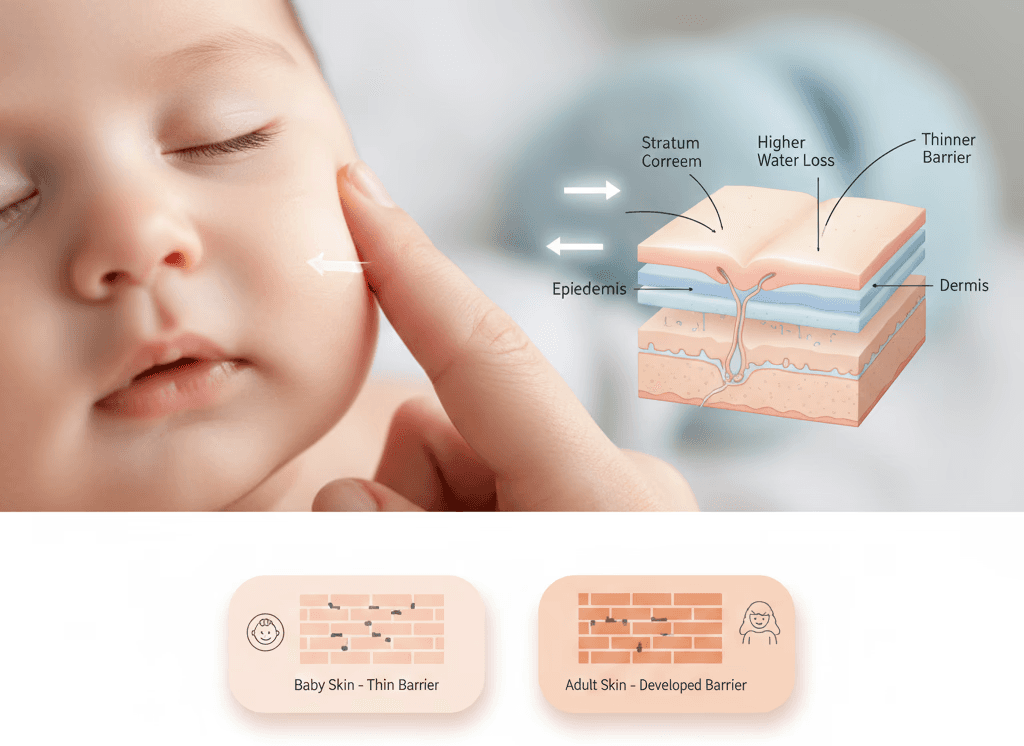
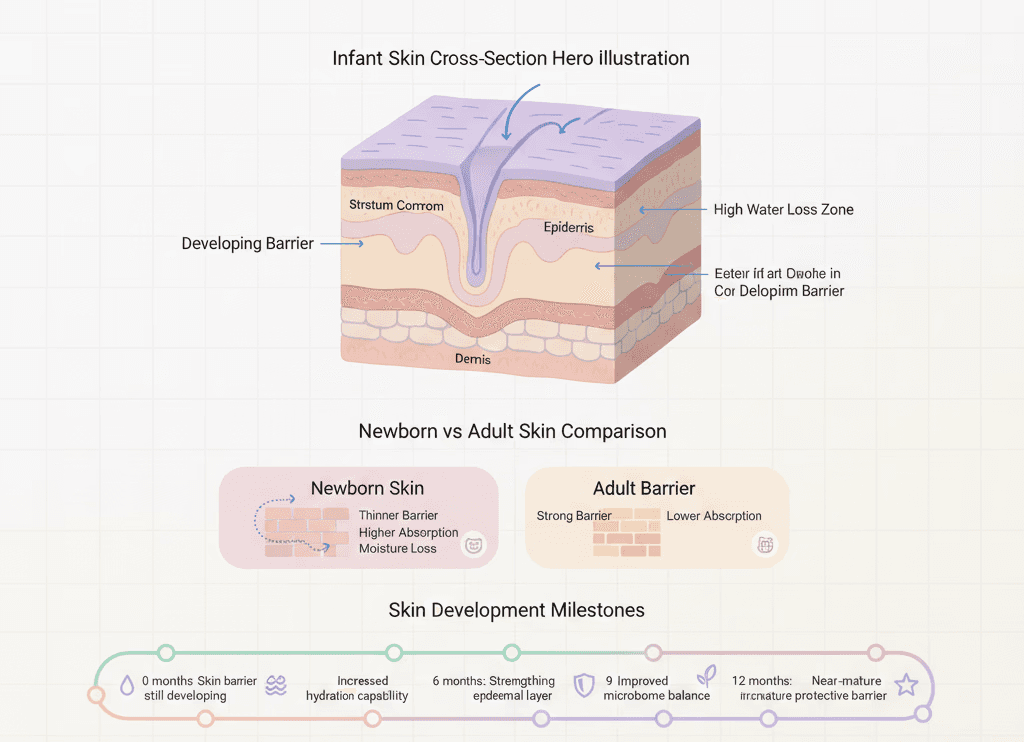
Newborn skin looks soft, but biologically it is still learning how to function outside the womb. In the first few months of life, a baby’s skin barrier is thinner, more permeable, and more prone to moisture loss than adult skin. This means hydration is not just about maintaining softness — it is about protecting a developing biological system that regulates temperature, prevents infection, and guards against environmental irritants.
Clinical dermatology research confirms that infant skin has higher transepidermal water loss (TEWL) and a still-maturing acid mantle, which makes consistent moisturization essential for maintaining barrier integrity. Studies published on PubMed Central highlight that appropriate emollient use in early life can support barrier development and reduce dryness-related irritation (Source: https://pmc.ncbi.nlm.nih.gov/articles/PMC11791375/).
In 2026, parents are increasingly aware of ingredient labels and pediatric recommendations. Search queries like “best baby moisturizer,” “newborn dry skin treatment,” and “oil vs cream for baby” reflect purchase intent driven by safety concerns rather than cosmetic appeal.
Understanding the difference between oils, creams, and lotions is where informed care begins.
Oils primarily function as occlusives. They create a surface layer that slows down moisture evaporation from the skin. While certain oils can temporarily improve hydration levels, research indicates that some plant oils may not always strengthen deeper lipid structures in the skin barrier. A pilot randomized study comparing olive oil and sunflower oil found that although hydration improved on the surface, lipid barrier structure did not necessarily strengthen in the long term (Source: https://www.researchgate.net/publication/283638703_Olive_Oil_Sunflower_Oil_or_no_Oil_for_Baby_Dry_Skin_or_Massage_A_Pilot_Assessor-blinded_Randomized_Controlled_Trial_the_Oil_in_Baby_SkincaRE_OBSeRvE_Study).
This does not mean oils are ineffective. It means that formulation matters. Clinically developed baby oils are different from kitchen oils, and the fatty acid composition plays a crucial role in how infant skin responds.
Creams, on the other hand, contain both water and oil components. They often include humectants such as glycerin, which draw moisture into the skin, combined with occlusives that seal it in. Pediatric dermatology guidelines frequently recommend creams for babies experiencing dryness, particularly in colder or low-humidity climates. According to pediatric care guidance from the Royal Children’s Hospital, applying moisturizers shortly after bathing helps trap hydration and strengthen the skin barrier (Source: https://www.rch.org.au/kidsinfo/fact_sheets/Skincare_for_babies/).
Lotions are lighter emulsions and are often suitable for warm or humid climates where heavy creams may feel excessive. The real differentiator is not the texture alone but the ingredient safety profile. Dermatologists consistently advise parents to choose fragrance-free, dye-free, and paraben-free formulations designed specifically for infant skin.
When pediatric dermatologists evaluate baby skincare products, they look for specific markers of safety and efficacy. These include fragrance-free labeling, hypoallergenic testing, absence of parabens and phthalates, pH balance aligned with infant skin, and dermatologist testing credentials. These criteria are consistently referenced in pediatric skincare surveys and clinical practice discussions (Source: https://athenaeumpub.com/wp-content/uploads/A-Survey-on-Neonatal-and-Infant-Skincare-Indian-Dermatologists-Pediatricians-and-Cosmetologists-Perspective-on-Product-Prescription-Pattern-and-Parents-Awareness.pdf).
Seasonal considerations also influence moisturizer choice. In dry winter air, thicker creams provide longer-lasting hydration and barrier reinforcement. In humid summer climates, lighter lotions may be sufficient to maintain skin comfort without clogging pores. For babies prone to eczema or chronic dryness, pediatric consultation is advised before selecting products, as ceramide-based or barrier-repair formulations may be more appropriate.
Parents often ask whether moisturization is necessary immediately after birth.
Should I moisturize my newborn right after birth?
In most cases, immediate moisturization is not required in the first few days of life unless dryness is visible. Newborns are born with vernix caseosa, a protective natural coating that supports barrier function. As the vernix naturally sheds, mild flaking can occur. If the skin appears dry or irritated after the initial adjustment period, gentle application of a pediatrician-recommended moisturizer once or twice daily is appropriate. Applying moisturizer within a few minutes after bathing is especially beneficial because it helps seal in hydration while the skin is still slightly damp (Source: https://www.rch.org.au/kidsinfo/fact_sheets/Skincare_for_babies/).
Consistency matters more than quantity. Over-application can sometimes overwhelm delicate skin, while insufficient hydration may lead to dryness or irritation. Observing your baby’s skin response is key.
In the broader baby skincare market, there has been a visible shift toward clinically informed formulations rather than purely “natural” positioning. Parents are increasingly skeptical of heavy fragrance and unnecessary additives. Ingredient transparency has become a trust signal.
This is where balanced formulations such as Neuva Life Sciences’ baby moisturizer align with modern pediatric expectations. Designed to support hydration while respecting infant skin sensitivity, the product focuses on gentle barrier care rather than exaggerated claims. When integrated into a simple daily routine — mild cleansing followed by measured moisturization — such formulations can help maintain skin comfort across seasons.
Moisturizing newborn skin is not about chasing softness. It is about supporting a developing biological system with informed choices. When parents understand how the skin barrier functions and how oils and creams interact differently with it, they move from guesswork to intentional care.
In 2026, baby skincare is defined by simplicity backed by science. Gentle cleansing, appropriate hydration, and consistent routines build stronger skin foundations over time. The right moisturizer, applied thoughtfully, becomes a quiet but powerful part of early-life wellness.

Similar Blogs
News, Voices & Impact
Explore updates, field notes, and stories that showcase our mission and impact.