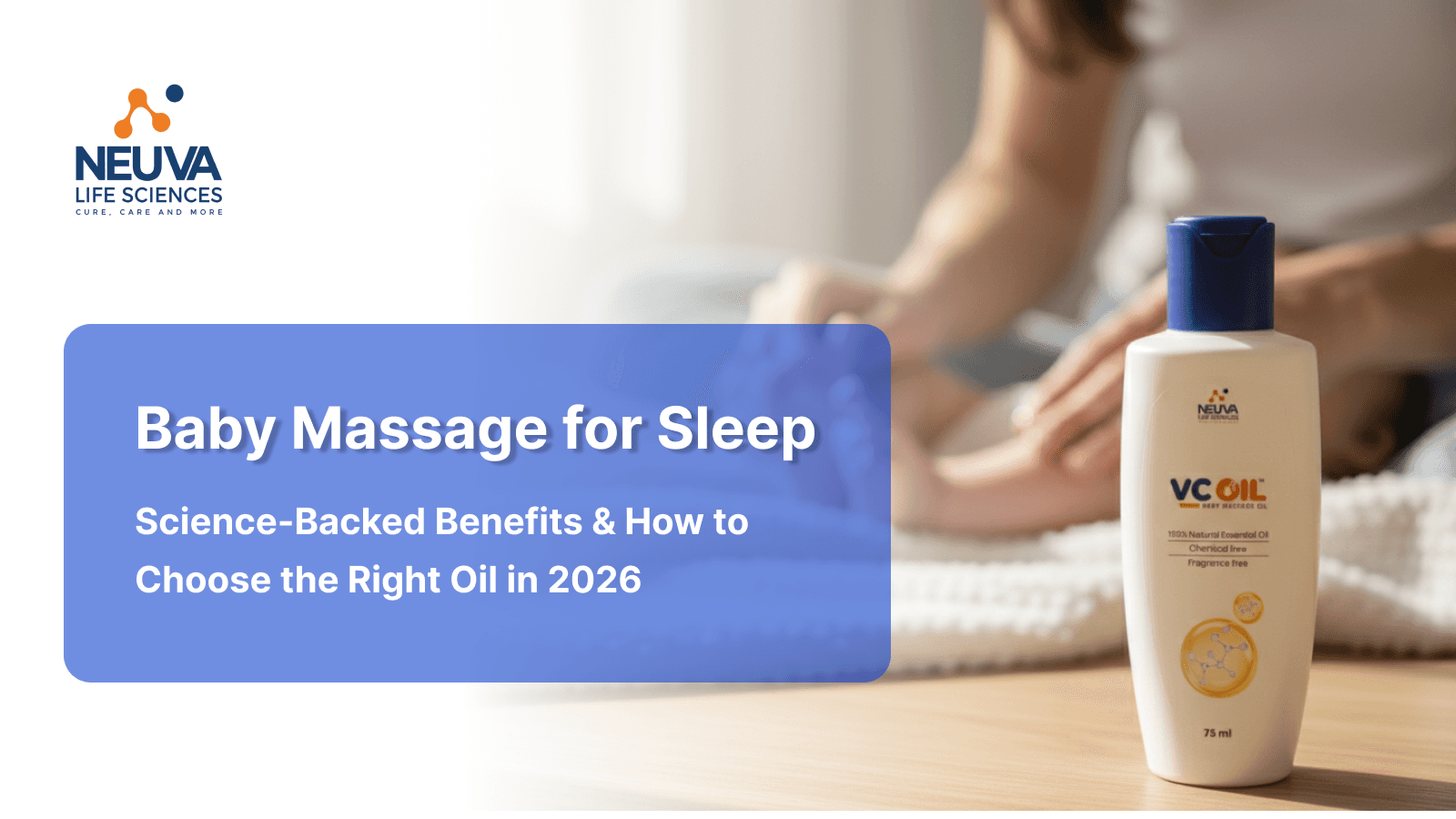
Baby Massage for Sleep: Science-Backed Benefits & How to Choose the Right Oil in 2026
Feb 28, 2026
Baby Massage for Sleep: Why Gentle Oils Matter More Than Ever in 2026
Modern parenting has shifted from reactive care to proactive wellness. Today’s parents are not just asking “Which oil is best?” but “What does science say about touch, sleep, and skin barrier health?” Baby massage has moved from being a cultural tradition to a clinically observed practice that supports infant development.
Multiple studies show that infant massage can positively influence sleep patterns, reduce stress responses, and improve parent–child bonding. A 2022 systematic review published on PubMed Central highlights how massage therapy in infants improves weight gain, sleep quality, and physiological stability in both full-term and preterm babies (Source: https://pmc.ncbi.nlm.nih.gov/articles/PMC9179989/). These findings are driving a noticeable increase in parents searching for terms like “baby massage oil benefits” and “baby massage for sleep routine.”
The growing interest isn’t aesthetic. It’s neurological.
Touch stimulates the vagus nerve, which plays a key role in regulating digestion, heart rate, and emotional calm. Earlier research has shown that structured massage sessions help infants sleep longer and settle faster (Source: https://pmc.ncbi.nlm.nih.gov/articles/PMC2844909/). When done consistently before bedtime, massage becomes a cue — signaling safety, warmth, and routine.
Why Oil Choice Matters for Newborn Skin
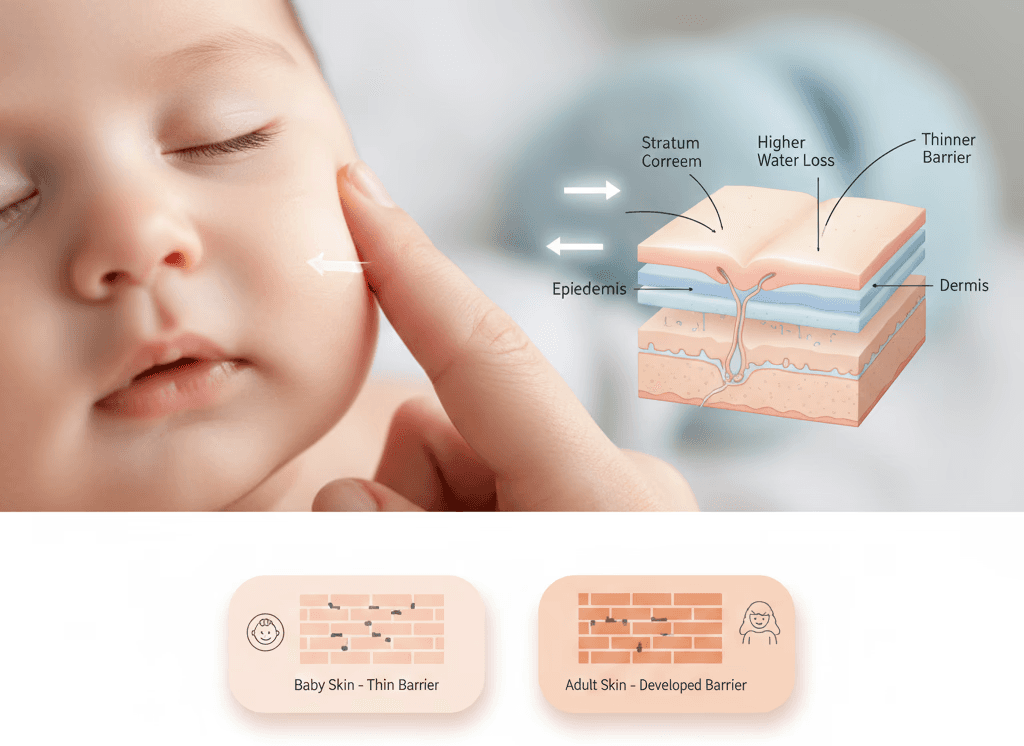
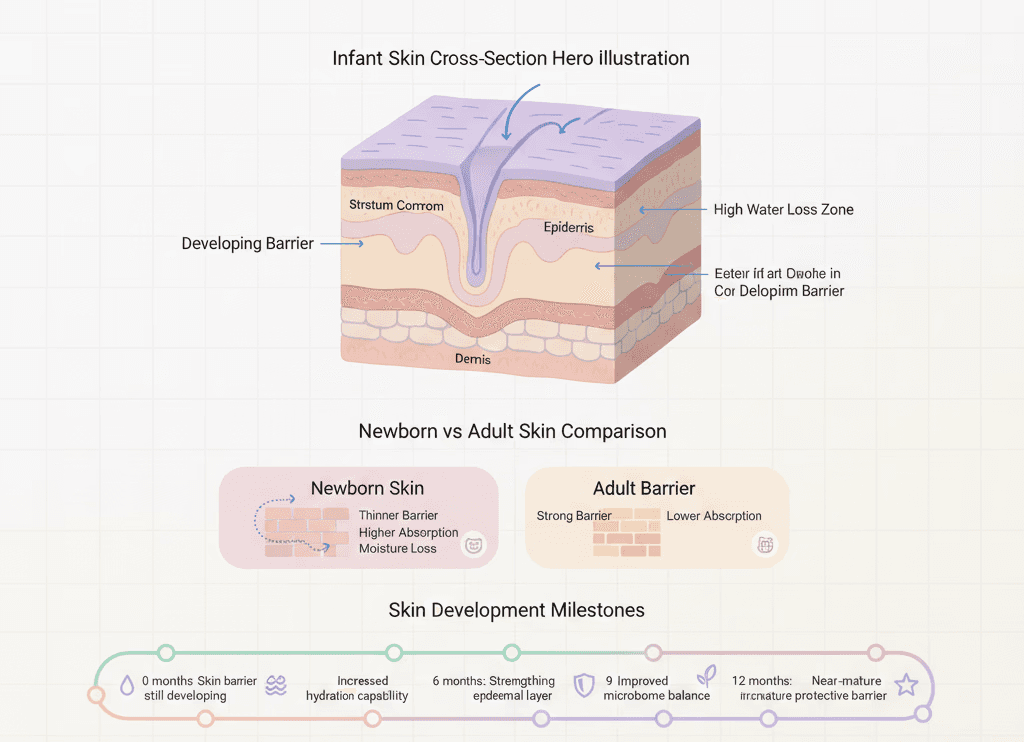
Infant skin is significantly thinner and more permeable than adult skin. The skin barrier continues developing during the first year of life, which makes product choice critical. According to dermatological reviews, certain emollients help reduce transepidal water loss and strengthen barrier function (Source: https://pmc.ncbi.nlm.nih.gov/articles/PMC3439947/).
However, not all oils behave the same way.
Mineral oils create a stable protective layer, reducing moisture loss and protecting against irritation. Vegetable oils, depending on their fatty acid composition, may either support barrier repair or, in some cases, disrupt it if poorly formulated. This is why pediatric guidance emphasizes fragrance-free, clinically tested formulations rather than purely “natural” labels.
Indian pediatric guidelines also recommend cautious emollient selection and recognize the protective role of certain oils, especially in diaper areas prone to moisture exposure (Source: https://www.indianpediatrics.net/feb2021/153.pdf).
The takeaway is simple: the oil you choose is not just about glide — it directly interacts with developing skin biology.
The Link Between Massage and Sleep Quality
Parents often report that babies who receive consistent evening massage fall asleep faster and wake less frequently. While every baby is different, evidence suggests tactile stimulation helps regulate cortisol levels and promotes serotonin release, which later converts to melatonin — the hormone responsible for sleep regulation.
Healthline’s medically reviewed guide on baby massage oils also emphasizes choosing gentle, hypoallergenic products and incorporating massage as part of a calming bedtime ritual (Source: https://www.healthline.com/health/baby/which-oil-is-best-for-baby-massage).
The key is repetition. Babies thrive on predictability. When massage happens at the same time each evening, the body begins to anticipate rest.
A Simple 5-Minute Bedtime Massage Routine
This is the only structured section you need to remember:
Calm Room → Warm Hands → Gentle Strokes → Circular Tummy Motions → Soft Closure
Start in a warm, quiet room with dim lighting. Pour a few drops of oil into your palm and warm it before touching your baby’s skin. Begin with long strokes along the legs, move to arms, and then gently massage the torso. Use slow clockwise circles on the tummy to support digestion. Finish with light strokes across the forehead and scalp to signal closure.
Five minutes is enough. Consistency matters more than duration.
Common Questions Parents Ask
One of the most searched queries around infant care is:
How often should I massage my baby?
For healthy full-term babies, once daily is generally safe and beneficial, especially as part of a bedtime routine. However, it is important to observe your baby’s cues. If the baby appears overstimulated, hungry, or uncomfortable, it is better to postpone the session. For preterm infants or babies with skin conditions like eczema, consult a pediatrician before establishing a routine. Clinical research supports massage benefits, but individual needs vary (Source: https://pmc.ncbi.nlm.nih.gov/articles/PMC2844909/).
Ingredient Transparency Is the New Standard
The 2026 baby skincare trend is clear: parents want clinically aligned formulations. Transparency builds trust. According to dermatology discussions on infant skincare, fragrance and unnecessary additives are among the most common irritants in newborn products (Source: https://pmc.ncbi.nlm.nih.gov/articles/PMC3439947/).
This is where evidence-driven brands are gaining traction. Instead of relying on emotional claims, they focus on ingredient clarity, dermatological testing, and safety validation.
When evaluating massage oils, look for:
Fragrance-free labeling
Dermatologist testing
Clear ingredient disclosure
Non-comedogenic formulation
Alignment with pediatric skin guidelines
The difference between marketing and medicine lies in these details.
Where VCoil Fits in the Modern Baby Care Routine
In a market flooded with options, formulations like VCoil Baby Massage Oil from Neuva Life Sciences align with this science-first approach. The brand positions its product around safety, gentle hydration, and compatibility with sensitive skin. While parents should always patch test and consult pediatric advice when needed, choosing a clinically conscious oil strengthens the massage-sleep connection.
When combined with a consistent nighttime ritual, the right massage oil becomes part of a broader wellness system — not just a skincare step.
You can explore their approach and product transparency here:
https://neuvalifesciences.com/
The Bigger Shift in 2026 Baby Care
Baby skincare is no longer just about softness. It is about microbiome balance, barrier support, and neurodevelopmental impact. The global baby massage oil market has expanded alongside growing awareness of infant mental health and skin science.
The ritual of touch, supported by evidence and the right formulation, creates measurable outcomes: calmer nights, stronger bonding, healthier skin.
Massage is not a trend. It is a return to fundamentals — supported now by data.
If you are building a bedtime routine, start with consistency. Choose a gentle, research-aligned oil. Watch how your baby responds over a few weeks. In many cases, the simplest rituals create the deepest impact.
And in baby care, calm nights are everything.

Similar Blogs
News, Voices & Impact
Explore updates, field notes, and stories that showcase our mission and impact.